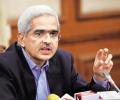
Softening inflation, Das said would make available more policy space to the central bank to address risks to the growth going forward.
Shares of ICICI Bank may outperform those of HDFC Bank in the near-term, analysts said recently, after the Sandeep Bakhshi-led private sector lender reported a strong set of numbers for the July to September quarter (Q2) of financial year 2023-24 (FY24). The result, they said, reiterated that ICICI Bank is maintaining a sustainable and prudent growth led by tech-driven initiatives as against HDFC Bank, which is facing merger related challenges. According to analysts at Prabhudas Lilladher, ICICI Bank is valued at par with HDFC Bank at 2.2x/1.9x on FY25/26E core adjusted book value (ABV) basis.
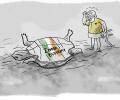
S&P Global Ratings on Tuesday affirmed India's sovereign rating at the lowest investment grade of 'BBB-' for the 14th year in a row with a stable outlook, and said that the country's strong external settings will act as a buffer against financial strains despite elevated government funding needs over the next 24 months. The sovereign credit ratings on India reflect the economy's above-average long-term real GDP growth, sound external profile, and evolving monetary settings, S&P Global Ratings stated. "India's democratic institutions promote policy stability and compromise, and also underpin the ratings. "These strengths are balanced against vulnerabilities stemming from the country's low per capita income and weak fiscal settings, including consistently elevated general government deficits and indebtedness," it said in a statement. S&P Global Ratings has forecast economic activity in India to begin to normalise throughout the remainder of fiscal 2022, resulting in real GDP growth of about 9.5 per cent.
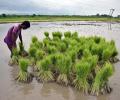
Trade and market players have already started factoring in at least 10 million tonnes drop in production in rice in the kharif season as compared to last year due to delayed sowing.
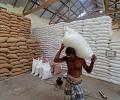
Rising prices of cereals and concerns over rice production in the 2023-2024 crop year due to insufficient rains followed by floods could be the possible causes.

"The main risk stems from the uncertainty surrounding the outcome of the south west monsoon in view of the rising probability of an El Nio event around July-August, and its implications for food inflation," RBI said, as it kept the status quo on key interest rate for the third time in a row.

Jammu and Kashmir and Odisha on Tuesday recorded their first cases of the Omicron variant of COVID as the count of the new strain in 14 states and union territories crossed 200 even as the Centre said there is a need to 'activate' war rooms, take 'pro-active' action and consider night curfews.
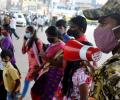
The government on Friday warned about the declining compliance to mask usage in the country amid concerns over the Omicron variant of the coronavirus and urged people to follow COVID-appropriate behaviour and get vaccinated to prevent surge in cases.

The Centre has decided to create a buffer stock of 350,000 tonnes.

Union Home Minister Amit Shah on Monday reviewed the preparations for Cyclone Yaas including the evacuation of people on the high seas as well as in vulnerable coastal areas and the safety of COVID-19 facilities.

The production in Maharashtra is pegged higher at 11-11.5 million tonnes against 10.71 million tonnes

Even before NCP-Ajit Pawar leaders came to meet in Delhi, the central government decided to buy 200,000 tonnes of onions from farmers at Rs 24.1 per quintal. This was among the highest prices at which onions have ever been bought from farmers.
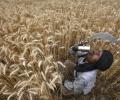
There has not been a large impact of untimely rain and hailstorm so far in several major wheat-growing areas, and those might have damaged around 3 per cent of the standing crop -- not enough to make a big dent in the expected 112 million tonnes of production in FY24, a senior government official said on Tuesday. Relentless rain pounded most North Indian states all through March. Separately, the chairman of Food Corporation of India (FCI), Ashok K Meena, told reporters the agency was on track to achieve the targeted 34 million tonnes of procurement in FY24 on the back of a strong start to the purchase season from Madhya Pradesh.
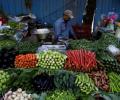
Wall Street brokerage Bank of America Securities has pencilled in lower than the consensus retail inflation for the current fiscal year at 5 per cent, but higher than the previous forecast of 4.7 per cent. Stating that the June print will be critical for the future trajectory -- after the extremely high 6.3 per cent print in May, the brokerage in a report on Friday revised upwards its forecast by 30 bps to an yearly average of 5 per cent for the year to March 2022. "Though the June print will be critical for future trajectory, beyond near-term, we find some comfort from our analysis of four key factors that are likely to influence CPI inflation the most.

'We have done what we needed to do on behalf of the consumers'.

Events to keep an eye out for...

Changes in global oil and gas rates matter more to India's economy than other major economies because the country imports around 87 per cent of its oil, half of its gas in the form of LNG, and over 60 per cent of its LPG.

The session was marked by volatility and stock-specific action, even as the overall sentiment remains risk-averse, brokers said.

The health system is trying to ensure that it isn't caught by surprise -- the way it was last time. So, hectic preparations are on.

Prime Minister Narendra Modi was on Saturday briefed about the new 'Omicron' variant of the coronavirus, and he asked officials to review the plans to ease international travel restrictions in light of the 'emerging new evidence.'

Industry staring at a record surplus by next year
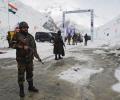
Indian and Chinese militaries on Monday moved back their frontline troops to the rear locations from the face-off site of Patrolling Point 15 in the Gogra-Hotsprings area in eastern Ladakh and dismantled temporary infrastructure there as part of a five-day disengagement process.
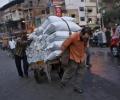
It is domestic policy distortions and inaction to correct them that lie behind the large CADs.
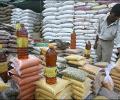
A maximum quantity of 23,340 tonnes was seized in Maharashtra.
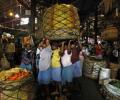
Government's food subsidy bill tends to rise in tandem with the MSP increase.

The repo rate could be reduced by 50 bps in the current year.

Monsoons have had limited effect on market returns for a given year, report Sachin Mampatta and Sundar Sethuraman.

In order to bring uniformity, the need for following the existing framework for either imposition of restrictions or allowing relaxations based on the burden of disease and strain on healthcare infrastructure still remain important.

As India looks to mend its Covid-battered economy, one thing that will grab the attention of all concerned is the path that both wholesale and retail inflation will follow. Even the Reserve Bank of India in its latest policy statement said, "Going forward, the inflation trajectory is likely to be shaped by uncertainties impinging on the upside and the downside.

The restrictions imposed in March led to a sharp slump in demand from bulk consumers like hotels, restaurants, and roadside tea stalls, as they were forced to shut down. Sales of major milk products such as ice-cream, butter milk, and cheese, which usually spike during summer, also dropped.

A bench of justices D Y Chandrachud and M R Shah said the high court order of May 5 is a well calibrated, deliberated and judicious exercise of power".

With the dizzying rise in the number of Covid-19 cases in the country, India Inc has transitioned from a wait-and-watch policy to full-on emergency mode, bringing back remote and flexi work, stringent safety protocols, and allowing only essential travel. Companies - especially in metros like Delhi, Mumbai and Kolkata - that had adopted a hybrid work model during the last few months when the caseload remained low, are either switching back entirely to work-from-home (WFH), or calling skeletal staff to office on select days. Take the case of cigarettes-to-hotels major, ITC, which had been on a hybrid work model over the last few months.
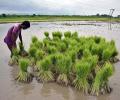
The area under paddy - the biggest foodgrain during the kharif season - was almost 13 per cent lower in the week ended August 5 as compared to the same period last year despite a slight pick-up in rains in the main growing regions, triggering fears of a 10-12 million-tonne drop in final output. Sources said with the peak sowing season for paddy almost coming to an end in the big-growing states, any uptick in coverage from here onwards may not give the desired yields. With 30 per cent of normal average area in which paddy is grown every year remaining unsown till early August, there is a limited chance of a big uptick in output, trade and market sources said.

The Wildlife Institute of India's former dean Yadvendradev Vikramsinh Jhala, who was part of the cheetah project in the past, told PTI that KNP has 'inadequate space' for these animals.
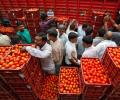
In the last 15 days, the rates have gone through the roof and the key vegetable is being sold at Rs 80-100 per kg by local vegetable vendors depending on the quality and locality.

'We are not talking pennies. The milk business is as large as the automobile industry (about Rs 4 trillion in sales),' points out T N Ninan.

To a specific question on the change in RBI's stance from "neutral" to "accommodative", Das said it means that there will not be any rate hike from here on.

Spiralling prices pinched the pocket of consumer as edible oil, fuel and many other commodities turned dearer this year amid pandemic-induced disruptions but the inflationary pressure is anticipated to ease, though marginally, in the coming months. As consumers, at retail as well as wholesale levels, are willy-nilly learning to live with the new normal of curbs to contain the spread of coronavirus infections, experts are of the view that elevated inflation is likely to stay longer. After dealing with the devastating blows from the second COVID wave, especially during the April-June period, the economy is well on the revival path but the emergence of Omicron might unsettle the recovery trajectory in the short term.

We have our own problems for sure and they are not trivial, but for now, our economy is in not too bad a shape, our politics is as personality-driven and authoritarian as that of most countries in the world. We must make the best of what we have and not be excessively unhappy looking at the grass on the other side of the septic tank which may not be greener after all!, observes Shreekant Sambrani.

If there was one event that made the month of August stand out, it was a strengthening of the dollar index to levels last seen only 20 years ago, as the Federal Reserve dispelled all doubts about its intention to continue raising interest rates. Predictably, most currencies suffered against the US unit, with the bulk of the losers belonging to the emerging markets pack. Amid the volatility, the rupee, however, has displayed significant resilience and fared much better than most of its peer currencies.
